

Trump floats new tariffs on China, India to squeeze Russia
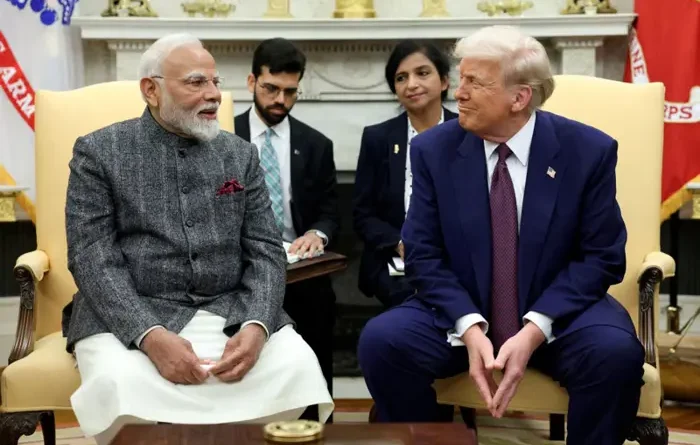
WASHINGTON: President Donald Trump told European officials he’s willing to impose sweeping new tariffs on India and China to push President Vladimir Putin to the negotiating table with Ukraine – but only if EU nations do so as well.
Trump made the ask when he called into a meeting with senior US and EU officials in Washington, according to people familiar with the discussion who asked not to be identified discussing private deliberations. The US is willing to mirror tariffs imposed by Europe on either country, one of the people said.
The proposal amounted to a challenge given that several nations, including Hungary, have blocked more stringent EU sanctions targeting Russia’s energy sector in the past. Such measures would require the backing of all member states.
Other potential measures discussed by US and EU officials include further sanctions on Russia’s shadow fleet of oil tankers as well as restrictions on its banks, financial sector and major oil companies, according to the people.
Trump’s suggestion, first reported by the Financial Times, comes after his deadline for Putin to hold a bilateral meeting with Ukraine’s Volodymyr Zelenskiy passed without indication that the Russian leader, who met Trump late last month in Alaska, was genuinely interested in engaging in face-to-face peace talks.
Instead, Moscow has stepped up its Ukraine bombing campaign, with a strike Tuesday killing at least two dozen pensioners as they collected payments in eastern Ukraine.
Any US action would ultimately depend on Trump, who has so far refrained from punishing Russia directly despite skating through several self-imposed deadlines and Putin’s continued reluctance to negotiate an end to the war. Trump has, however, already doubled tariffs on India to 50 per cent over its continued purchase of Russian oil.
Later Tuesday, Trump wrote a social media post that the US and India were continuing negotiations to address their trade barriers, and expressed optimism the two would reach an agreement to resolve their dispute. He also said he looked forward to “speaking with my good friend” Prime Minister Narendra Modi in the coming weeks.
Trump’s tariff proposal contrasts with a softer tone he has taken in recent months on China as part of apparent efforts to secure a summit with President Xi Jinping and a trade deal with the world’s second-largest economy. Last month, he extended a pause on higher tariffs on Chinese goods into early November, a move that stabilised trade ties.
Xi would likely retaliate against any escalation. Chinese exports have shown resilience despite a 55 per cent levy on shipments to the US, indicating Beijing has room to withstand more pain. For Trump, returning to tit-for-tat moves could destabilise China’s supply of rare earths that are critical to American manufacturing of everything from mobile phones to missiles.
Such a scenario would also jeopardise any meeting between Trump and China’s top leader that both nations are trying to arrange, and could take place as soon as next month on the sidelines of a major summit in South Korea.
China’s Foreign Ministry didn’t immediately respond to a request for comment about Trump’s latest tariff proposal.
The delegation of EU officials is visiting Washington this week to meet US counterparts and discuss the potential for joint action to pressure Russia to end its war against Ukraine and enter into negotiations with Kyiv.
Ukraine’s Prime Minister, Yuliya Svyrydenko, who also joined the discussions, said in a social media post that she urged Kyiv’s partners to target the shadow fleet, oil majors, refineries, trader, and other enablers.
The discussions come as the EU is discussing the content of a 19th package of sanctions, Bloomberg reported earlier.
Moscow is already under crippling sanctions from both the US and Europe but has been able to skirt some of their impact by sourcing restricted items from China and other third countries, as well as finding customers for its oil and gas in Beijing, India and elsewhere.
But as the Russian economy shows increasing signs of strain, measures targeting those supplies and sources of vital revenue would likely dial up the pressure on Moscow’s war machine and finances. – Bloomberg







Leave a Reply