


Safe School 2.0 proposal to be submitted to Education Ministry early November
PETALING JAYA: A comprehensive policy paper titled “Integrating Safe School 2.0 with the Education Ministry’s Safe School Framework” will be submitted to the ministry in early November 2025.
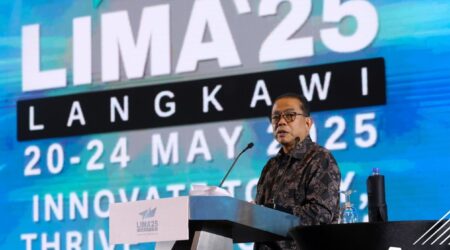
The proposal is spearheaded by MCA public policy and people’s livelihood research advisory committee chairman Datuk Dr Monna Ong Siew Siew, who said the policy paper is currently being finalised.
In a statement Friday (Oct 17), she said the proposal was the result of extensive collaboration among multidisciplinary experts.
The working committee consisted of academics from Tunku Abdul Rahman University of Management and Technology (TAR UMT), Universiti Malaya (UM), Universiti Tunku Abdul Rahman (UTAR), HELP University, and Universiti Sains Islam Malaysia (USIM).
The committee also included medical practitioners, legal professionals, and chartered accountants who contributed their knowledge and experience to ensure that the proposal is comprehensive, evidence-based, and implementable.
According to Ong, the proposed Safe School 2.0 framework is designed to strengthen the national education system by introducing a new model of psychological safety, trauma-informed intervention, and social and emotional learning.
“The proposal seeks to prevent and respond more effectively to bullying, emotional distress, and digital exploitation among students while promoting a culture of empathy and resilience in schools.
“It also outlines a national implementation plan from 2026 to 2028. It recommends the creation of a National Council for Mental Health and School Crisis Intervention under the Education Ministry, the introduction of an EduSafe Dashboard to monitor students’ wellbeing, and large-scale teacher training in psychological first aid and trauma-informed education,” she said.
In response to the Education Minister’s announcement on Thursday (Oct 16) on five immediate school reform initiatives, Ong expressed her support, describing it as a positive and timely step forward.
However, she emphasised that meaningful change must address the root causes of the problem, not merely the surface symptoms. She added that reforms must reach the foundation of the issue to ensure that cases of violence, bullying, and emotional trauma among students are handled effectively and sustainably.
Ong also said that this proposal goes beyond physical safety and focuses on protecting the mental health, emotional stability, and dignity of every student.
“When schools become spaces that listen, understand, and heal, they nurture a generation that is both intellectually capable and emotionally strong,” she said.
She emphasised that Safe School 2.0 represents a fundamental shift in the philosophy of education in Malaysia. It calls for a move away from reactive discipline toward preventive and restorative approaches.
The proposal also calls for psychological wellbeing to be recognized as a National Key Performance Indicator within the next Malaysia Education Development Plan from 2028 to 2038.
Ong highlighted the need for close collaboration among ministries and agencies.
“The success of Safe School 2.0 will depend on the cooperation of the Health Ministry, Women, Family and Community Development Ministry, Home Affairs Ministry, and the Malaysian Communications and Multimedia Commission (MCMC) to ensure that student safety is protected physically, emotionally, and digitally,” she said.
She explained that every case of school violence or emotional distress signals a systemic gap that must be addressed.
“Safe School 2.0 provides a framework that focuses on prevention, support, and rehabilitation rather than punishment and fear,” she added.
The proposal also includes the recommendation to appoint psychological safety officers in all secondary schools and to establish a School Psychological Safety Index as a national measure for tracking student wellbeing and institutional progress.
“Safe School 2.0 is more than a policy document. It is a moral commitment to rebuild Malaysia’s education ecosystem on the foundation of compassion and humanity.
“Malaysia cannot afford to wait for another tragedy before taking action. The time to act is now. We must ensure that every child grows up in a school that nurtures both knowledge and humanity,” Ong said.









Leave a Reply