


Sabah’s new carbon governance law protects indigenous rights, says Hajiji
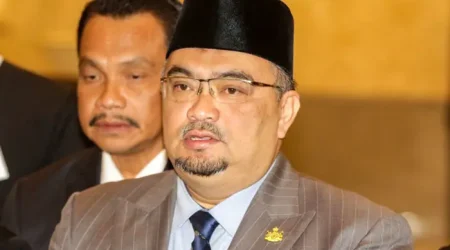
KOTA KINABALU: Sabah’s commitment towards protecting the environment goes far beyond conservation, said caretaker Chief Minister Datuk Seri Hajiji Noor (pic).
He said this is proven with laws, policies and initiatives that have been enacted and continues to be initiated to create a greener and more sustainable future for the state.
This includes the formulation of the Climate Change and Carbon Governance Enactment 2025, a landmark law establishing the Sabah Climate Action Council as a high-level decision-making body, ensuring that carbon rights belong to the State.
It also created a Climate Registry and Inventory Centre to track carbon projects and established the Sabah Climate Fund to support adaptation and resilience, Hajiji said at the opening of the International Conference on Borneo’s Green Heart here, Wednesday (Oct 22).
“Most importantly, it protects the rights of indigenous and customary landowners, ensuring that carbon projects on native land are built on consultation, respect, and shared benefits,” he said.
He said this is climate justice in action, fairness, inclusion, and sustainability walking hand in hand,” he said in his opening speech which was delivered by Deputy State Secretary Datuk Norlijah Danin.
Other than that, the State Government has amended key legislation, including the Sabah Land Ordinance, to recognise carbon storage and embed climate action across the state’s governance systems, said Hajiji.
He said while challenges from building institutional capacity and ensuring enforcement to securing funding and creating real impact on the ground remained, he believed that with strong political will, community partnership and good governance, there is no challenge that cannot be overcome.
“Together, we can turn ambition into action and action into lasting change,” he said.
Hajiji said Sabah’s commitment to protecting the Heart of Borneo (HoB) initiative remained strong and unwavering.
“To date, over 27% of our land, that’s about two million hectares, has been gazetted as Totally Protected Areas (TPA). And this year, we will go even further.
“We plan to gazette another three per cent under Section 5A of the Forest Enactment 1968, bringing us closer to our 30% TPA target,” he said.
This milestone reflects Sabah’s determination to ensure that Sabah’s forests – rich in biodiversity and carbon value, would remain a natural legacy for generations to come, said Hajiji.
He also highlighted one of the state’s most transformative efforts, which is the Food Systems, Land Use and Restoration Project (Folur).
Supported by the Global Environment Facility (GEF), and implemented by the United Nations Development Programme (UNDP) in partnership with the Sabah State Government, the Folur Project covers 2.38 million ha across 12 districts, benefiting more than 54,000 people.
Hajiji said its goal was to ensure that agriculture, especially palm oil, can co-exist in harmony with forest conservation and ecosystem restoration.
Through the Folur Project, he said Sabah aimed to bring over two million ha under improved management, restore 150,000 ha of forest, and rehabilitate 50,000 ha of degraded agricultural land.
“We will also prevent the loss of 14,000 hectares of high conservation value forests,” he said.
Together, these efforts could sequester over 10 million tonnes of carbon dioxide equivalent – a powerful contribution to Malaysia’s climate goals and a testament to Sabah’s leadership in sustainable landscape management, said Hajiji.
He expressed his appreciation to the Federal Government, particularly the Ministry of Natural Resources and Environmental Sustainability, for its continued support of the HoB initiative since 2009, with total funding of RM60mil to Sabah.
“This partnership reflects our shared belief that protecting nature is not a burden, but a responsibility and an opportunity,” he said.
Towards this end, Hajiji said the Sabah Forestry Department has also submitted a strategic project proposal under the 13th Malaysia Plan, reaffirming the State Government’s commitment to sustainable forest management and climate resilience.
“We look forward to continued collaboration with the Ministry in advancing these goals,” he said.










Leave a Reply