

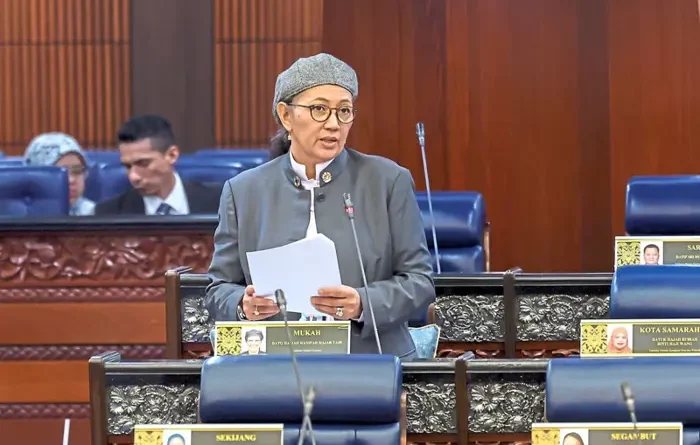
Government reviewing use of disposable income to target aid, says Hanifah
KUALA LUMPUR: The government is reviewing a more refined way to identify target groups for aid, including using disposable income as a fairer benchmark.
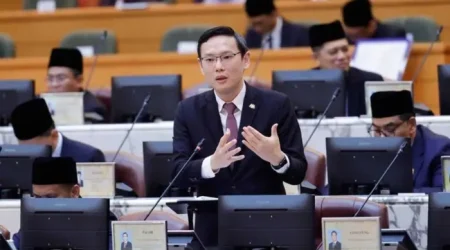
Deputy Economy Minister Datuk Hanifah Hajar Taib (pic) said the proposal needs further study to ensure it is workable and effective.
“For now, most assistance is determined using the Poverty Line Income, covering basic household needs such as food, non food items, housing, healthcare and education,” she said.
“In general, income group classifications help shape social policies and deliver support to intended groups,” added Hanifah on Wednesday (Dec 3).
She said the method uses statistical modelling that sorts households by income into equal sized groups or by relative position within the income distribution.
Hanifah said aid distribution remains focused on the B40, with eligibility determined by gross household income.
She was responding to Datuk Che Mohamad Zulkifly Jusoh (PN–Besut) on shifting from gross to disposable income for aid and subsidies.
To a supplementary question from Datuk Dr Richard Rapu (GPS–Betong) on thresholds for B40, M40 and T20, she cited the HIES 2024.
She said all three groups recorded income growth from wages, self employment, asset returns, investments and informal transfers.
“For B40 households, median income rose from RM3,440 in 2022 to RM3,815 in 2024, an average annual increase of 5.2%,” she said.
“The median income for the middle 40 climbed from RM7,694 in 2022 to RM8,599 in 2024, or 5.6% annually,” added Hanifah.
“As for the T20, median income increased from RM15,867 in 2022 to RM16,517 in 2024, reflecting a 2% annual rise,” she said.






Leave a Reply